
Dulux
Redesign of the experience for consumers and trade painters
| Product | Responsibility |
|---|---|
| Find a painter | End to end product design |
| Duration | Year |
|---|---|
| 18 Months | Feb 2024 to Oct 2025 |
| My Role | Team |
|---|---|
| Senior Product Designer | 1 Senior Product Owner, 1 Business Analyst, 1 Marketing Developer, Engineering team, Delivery team (Offshore) |
Problem statement
Dulux launched Find a Painter in 2023. The product connected consumers with accredited painters through a basic online form. The initial launch was successful. But the program had clear gaps. The matching algorithm was not reliable. The experience felt unfinished for both consumers and painters. Painter sign-up rates needed to grow.
The challenge was complexity. Dulux has three business units: house painting, roof restoration, and concrete resurfacing. Each business unit works independently. Each business unit has a different painter network in Australia and New Zealand. The solution needed to serve all three business units.
My brief was to redesign the product from end to end. The brief had three goals: improve the matching, increase painter acquisition, and improve the experience for consumers and trade painters.
Design process
User needs:
A digital agency had conducted user research. The research spanned:
- Competitor analysis against: Taubmans - Find a painter, Hipages - Job posting, Airtasker - Task marketplace posting
- User interviews: Four trade painters across Concrete, Roof, and House Painting. Five consumers that had used online tools to complete a painting / renovation project
- Moderated usability evaluation: Three clickable prototypes (Basic form, Visual surface selector, Address lookup and floor plan upload). Seven consumers
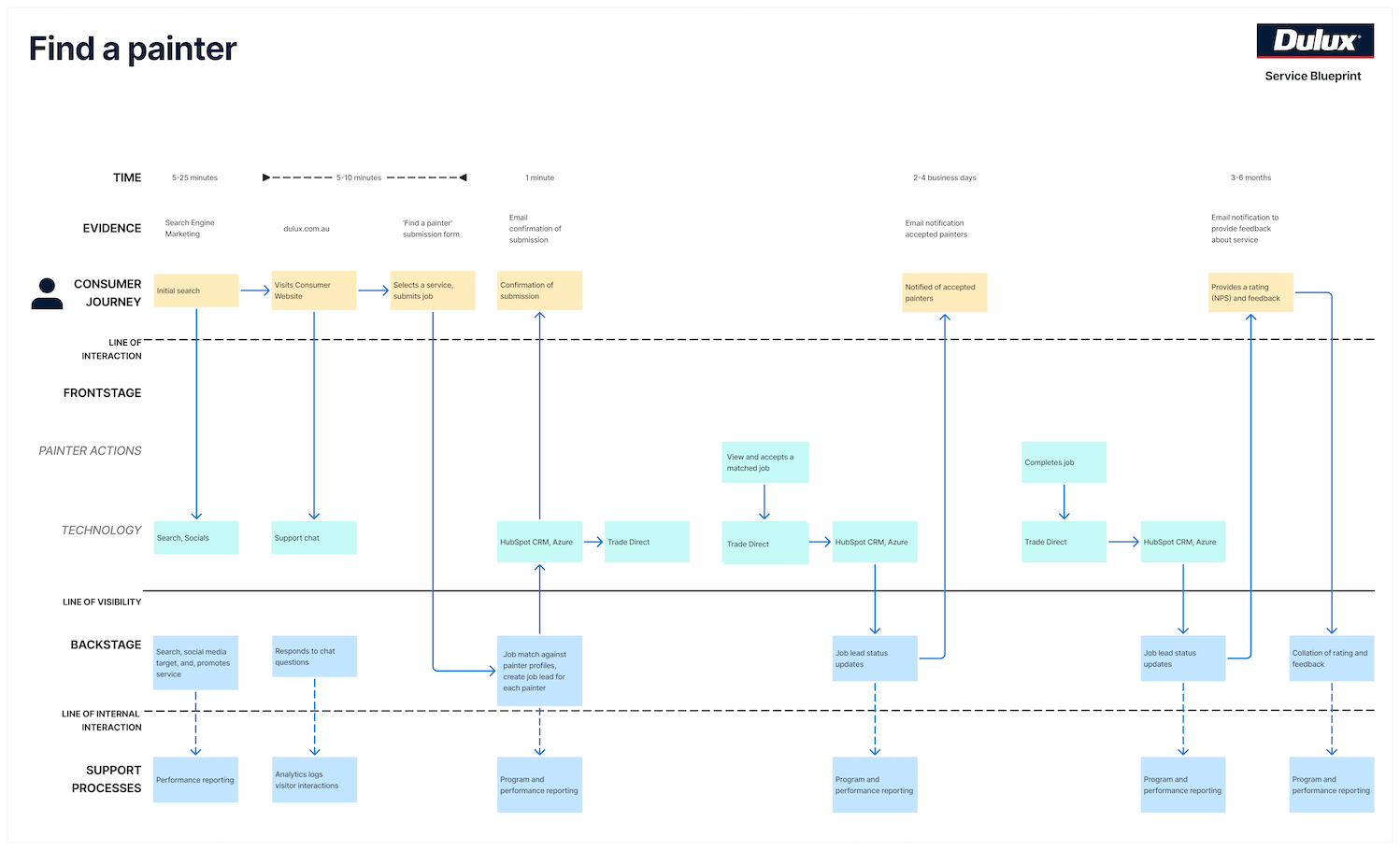
I used the research findings and recommendations as my foundation to create a customer journey map, and begin the discovery design process.
Mapping:
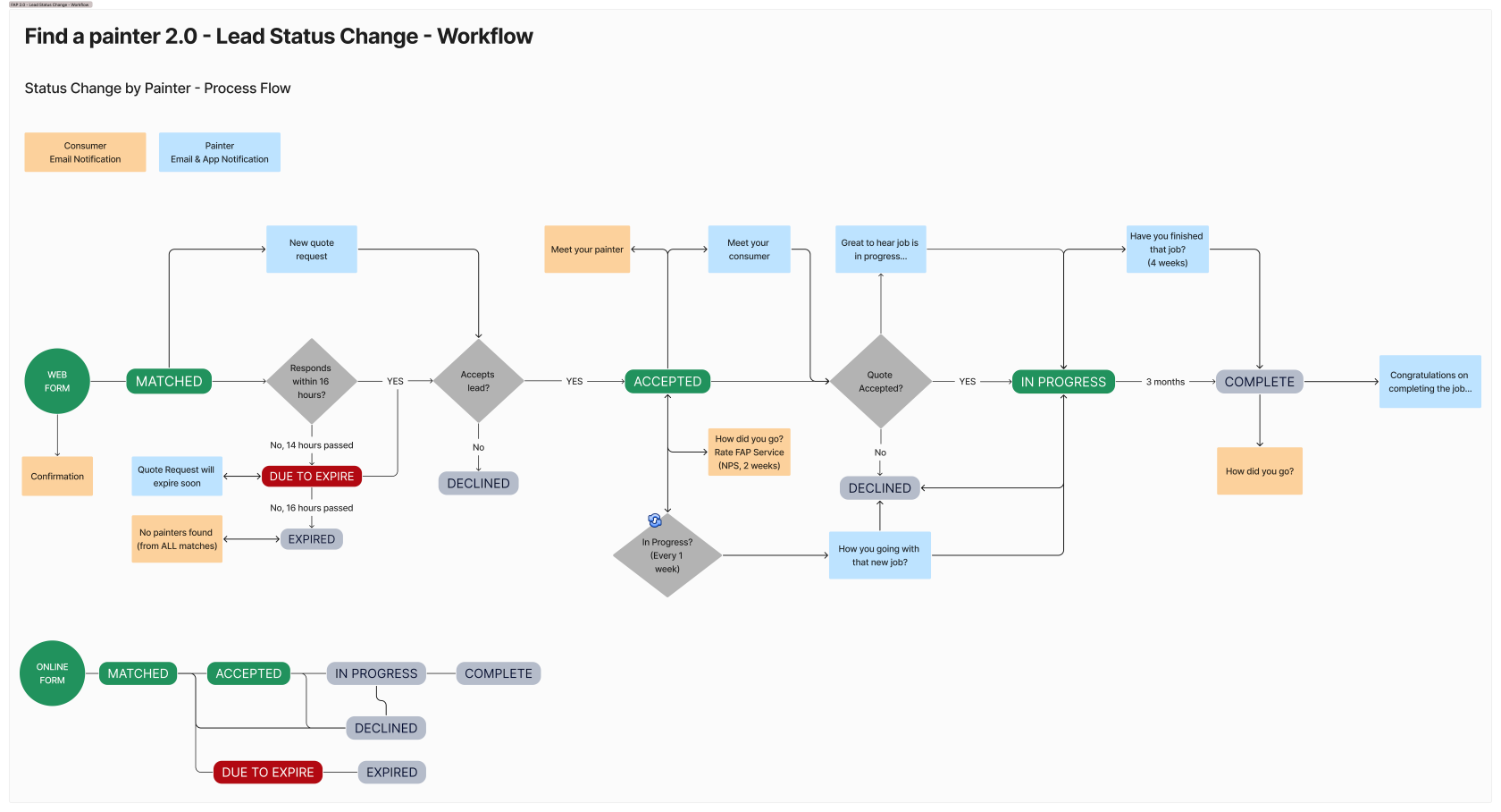
I worked with a business analyst and a marketing developer. Together, we mapped the current business rules, consumer and trade painter user flows, sitemap, and email templates in Confluence. I then ran stakeholder sessions with each business unit to find gaps. After these sessions, I explored future flows and information architecture in Miro.
Exploration:
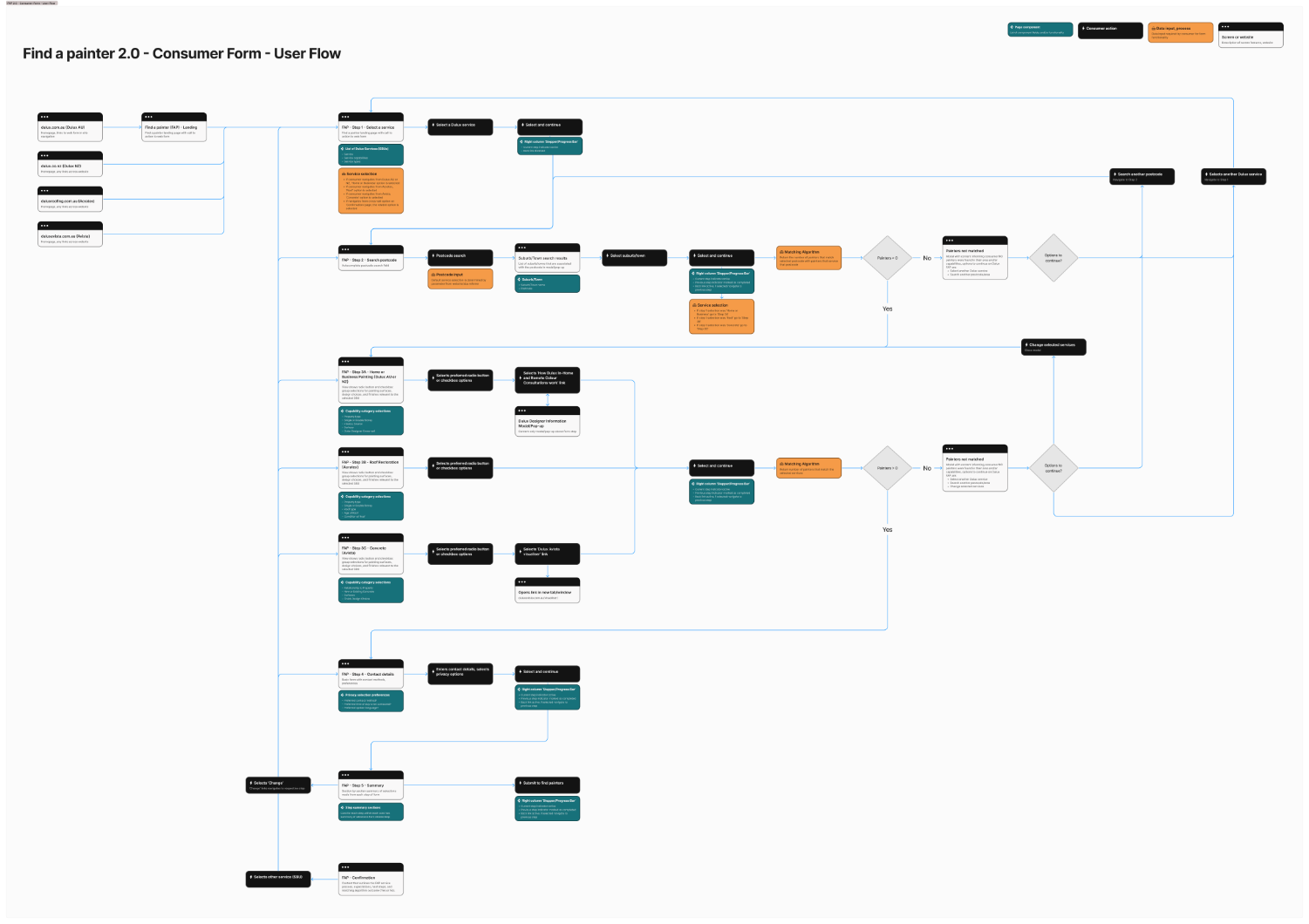
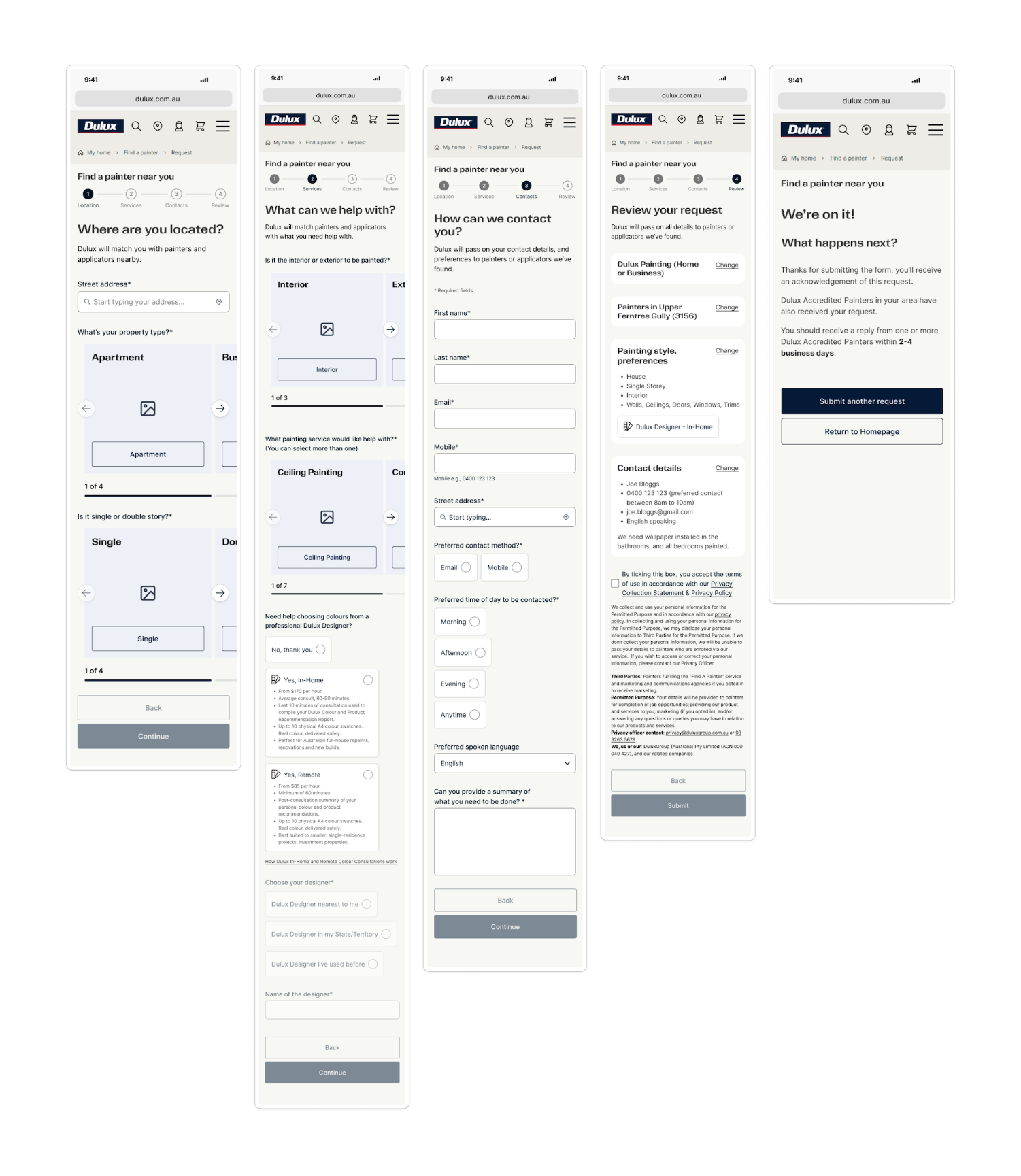
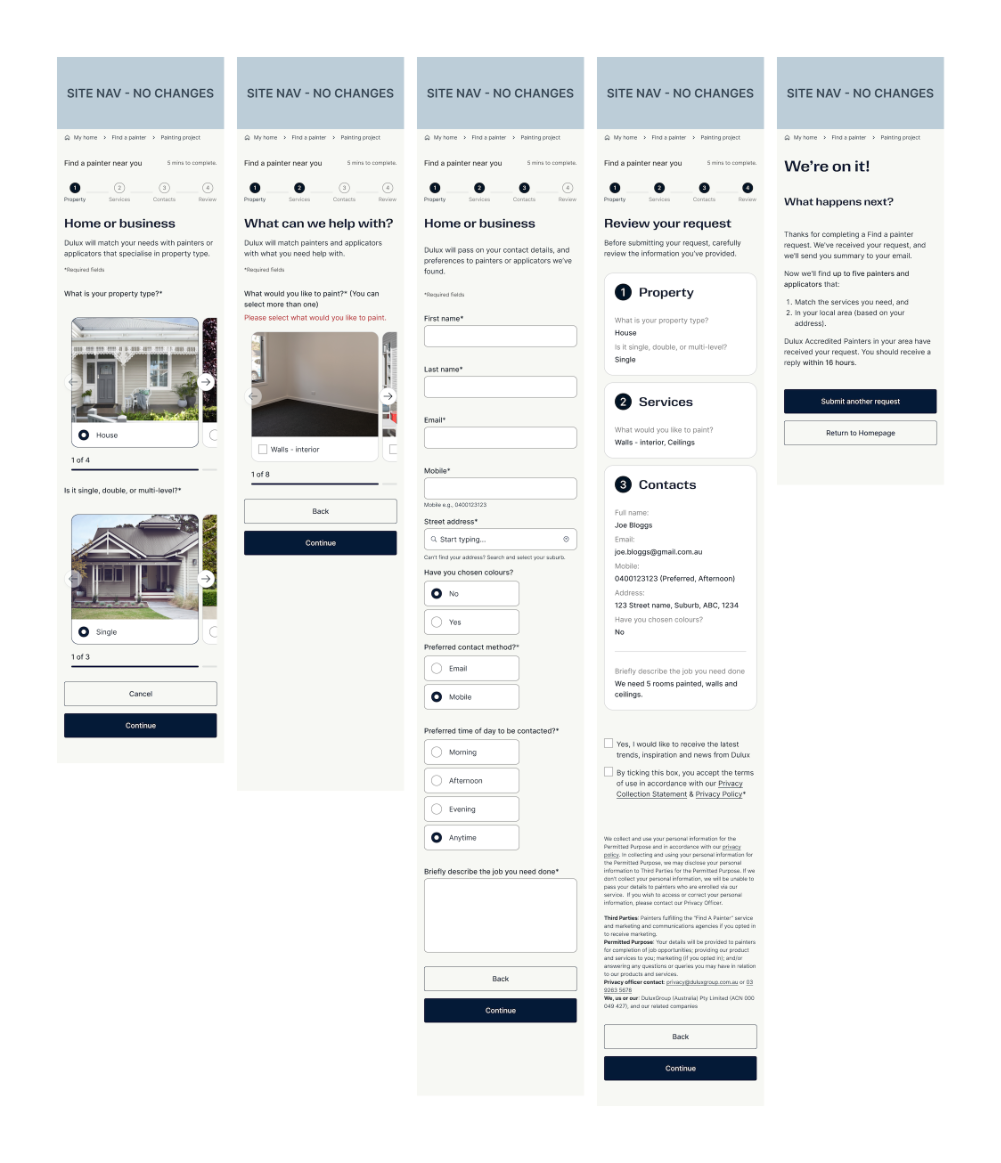
I aligned stakeholders on the UX vision. I then began low-fidelity exploration in Figma. The existing design systems for the consumer form and Trade Direct made this phase much faster. I found one key insight. A multi-step, image-based form can give consumers faster and clearer ways to describe their painting needs. The form can also give developers clean places to add business logic.
Alignment:
To finish discovery, I ran consultation workshops with IT integration, offshore development, marketing, and business owners. I prepared design artefacts: flow diagrams, screen exports, and prototypes. The business used these artefacts to get executive sign-off and capital funding.
Build:
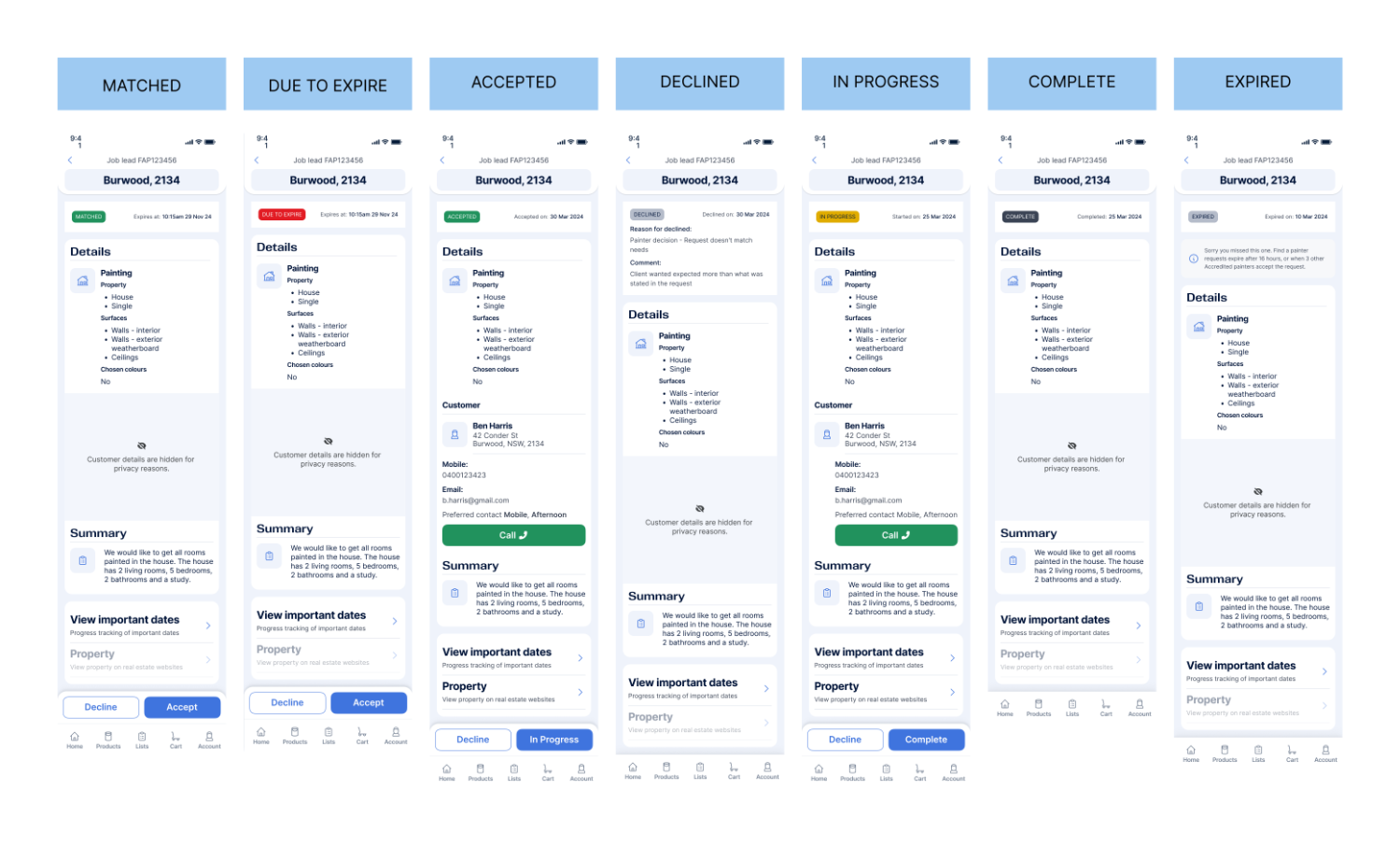
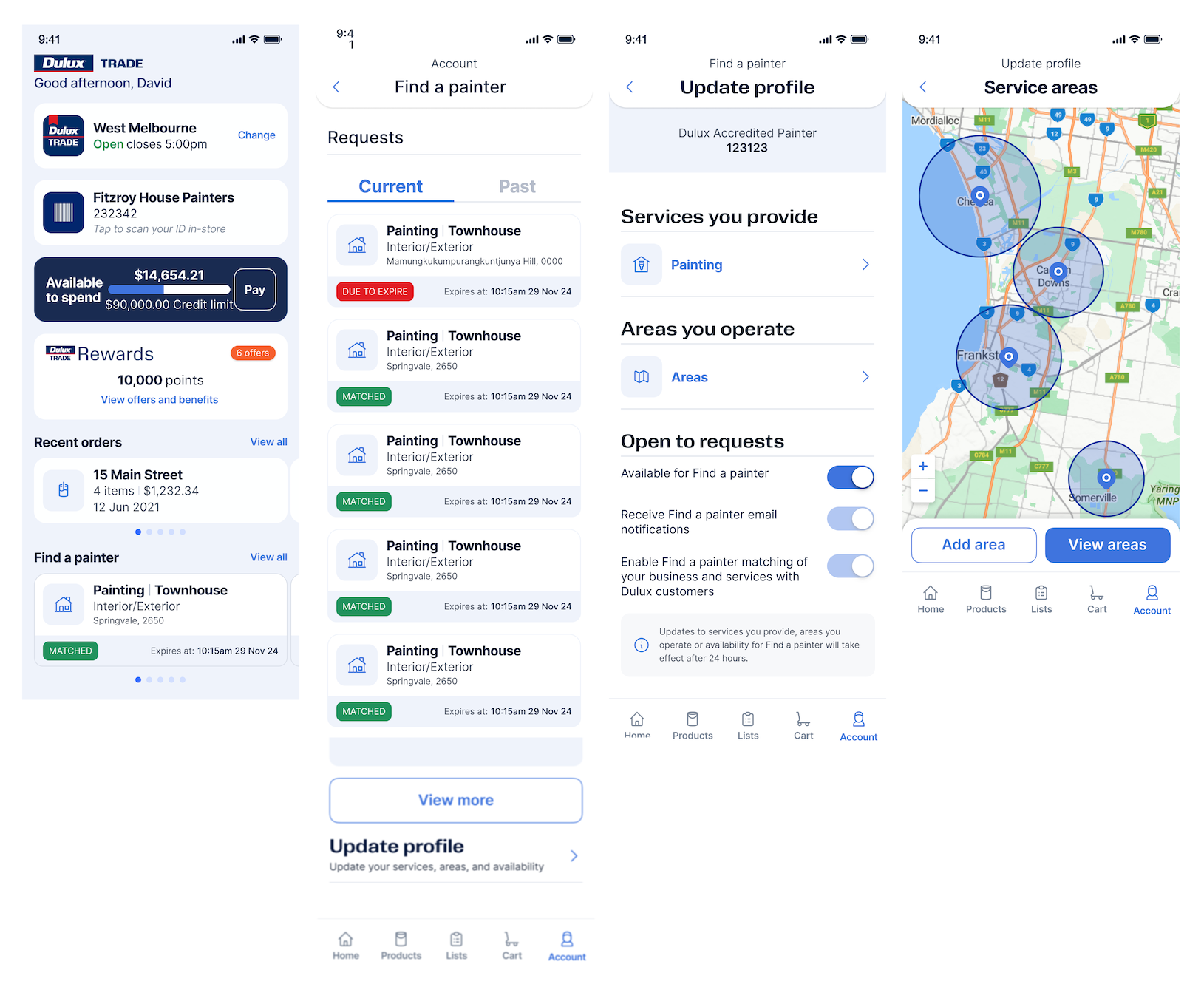
I was the only UX designer on the project. I designed all screens, flows, states, and components for three platforms: the consumer website, the Dulux Trade App, and the Dulux Trade Web. I worked in three-week sprints. I also examined each deployment against the design specs. I recorded all differences.
Outcomes
The product launched in June 2025 across all three Dulux business units. I delivered:
- 3 multi-step consumer form experiences
- A painter experience for Dulux Trade App
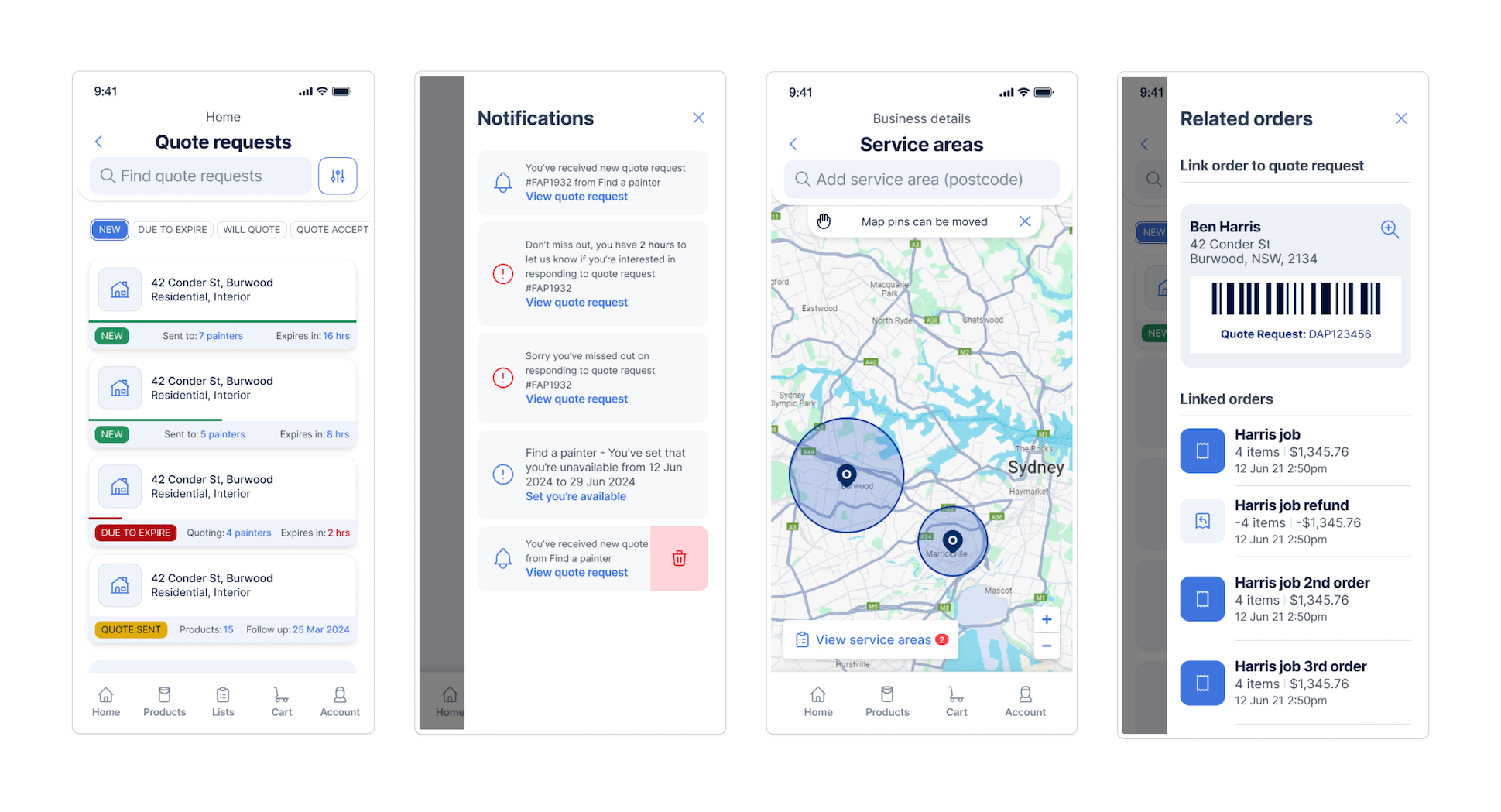
- A painter experience for Dulux Trade Web
Learnings
I worked inside a large business with many stakeholders. The work taught me lessons that I will use in future projects.
- Complexity is a design constraint. Business rules shape the user experience more than most designers expect. Designers must learn the rules early. This is not optional.
- Artefacts do political work. Reusable flows and prototypes gave leaders a shared language. This language helped leaders manage uncertainty and make decisions with confidence.
- Design systems are a strategic asset. Without design systems, the project timeline was not possible.
- Change causes anxiety. I included stakeholders in future planning through the whole project, not only at the end. This method made a real difference to stakeholder buy-in.