
Fire Permits Victoria
The project helped emergency services move from paper to digital fire permit applications
| Product | Responsibility |
|---|---|
| Fire Permits Victoria | End-to-end product design |
| Duration | Year |
|---|---|
| 12 Months | Jan 2020 to Dec 2020 |
| My Role | Team |
|---|---|
| Senior Product Designer | 1 Project Manager, 1 Scrum Lead/Business Analyst, 3 Developers, 1 Quality Assurance Specialist |
Problem statement
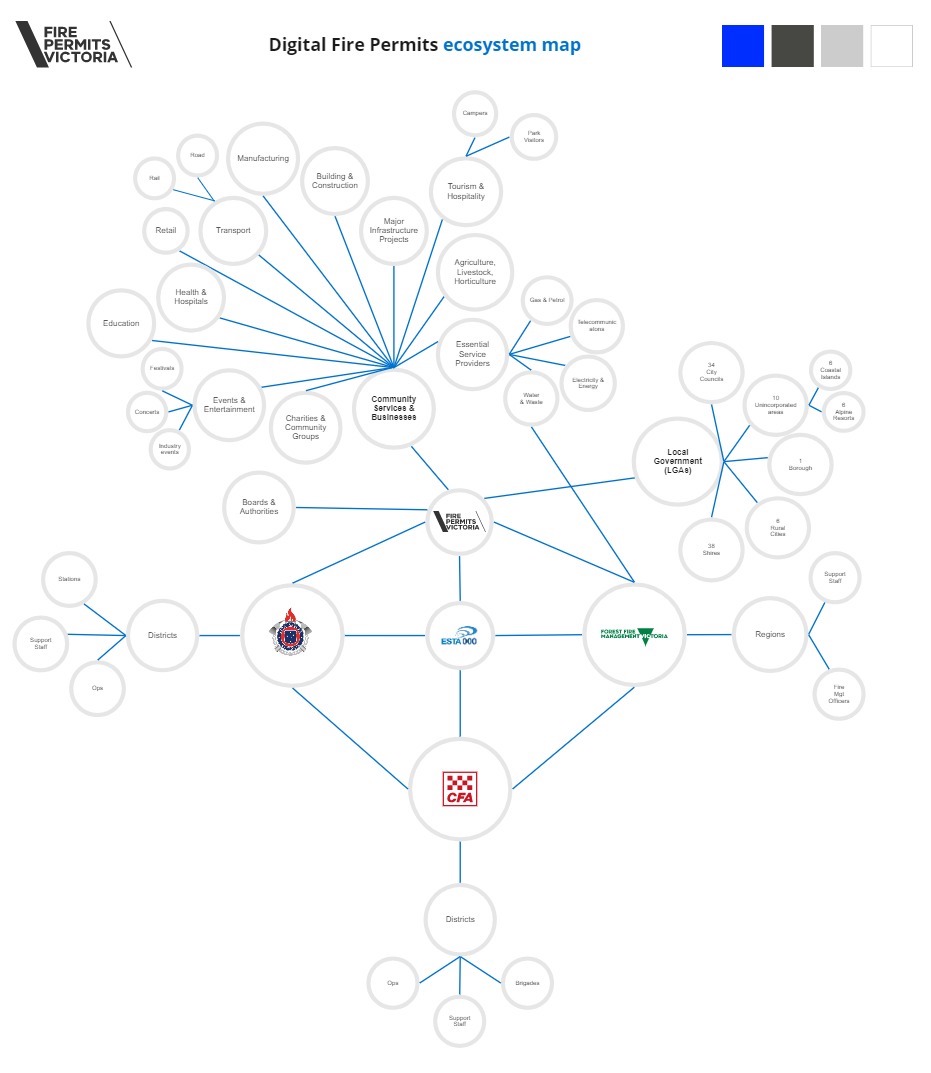
Fire Permits Victoria is a State Government platform. The platform unifies fire permit applications across three Victorian emergency services: CFA, FFMV, and FRV. Before this project, the process was entirely paper-based, fragmented across organisations, and not accessible on digital devices.
My challenge had two parts. First, the team did not understand the user need well. Second, the stakeholders worked across three independent fire services. These stakeholders needed a shared vision before design work started.
The brief was to design an end-to-end digital permits platform. The platform needed to let Victorian citizens and fire service Operations Managers check, apply for, and manage fire permits from any device, anywhere.
Design process
Discovery:
I started with the existing paper forms. I examined the forms to understand what the process required. I also found where the process failed users.
I then interviewed permit applicants. The applicants included small businesses and large commercial operators. These interviews revealed a wider range of user needs than the project first assumed.
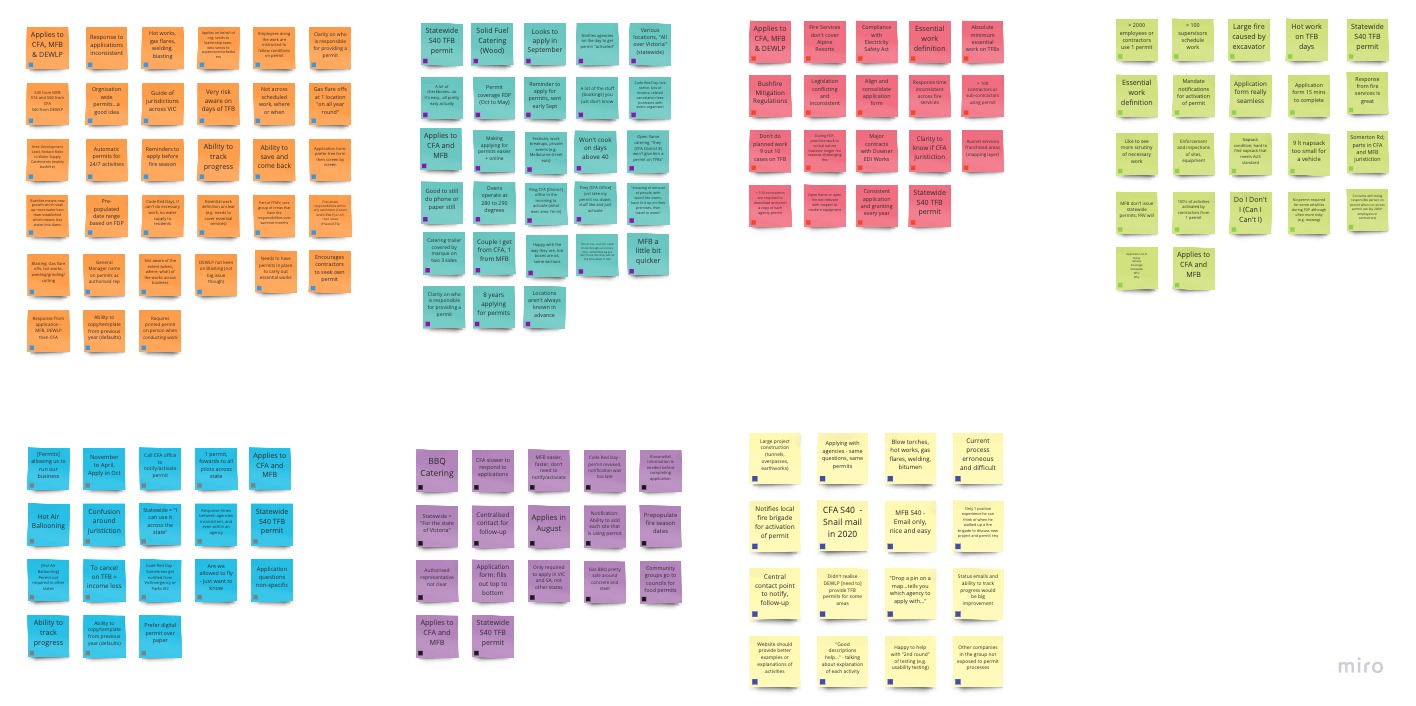
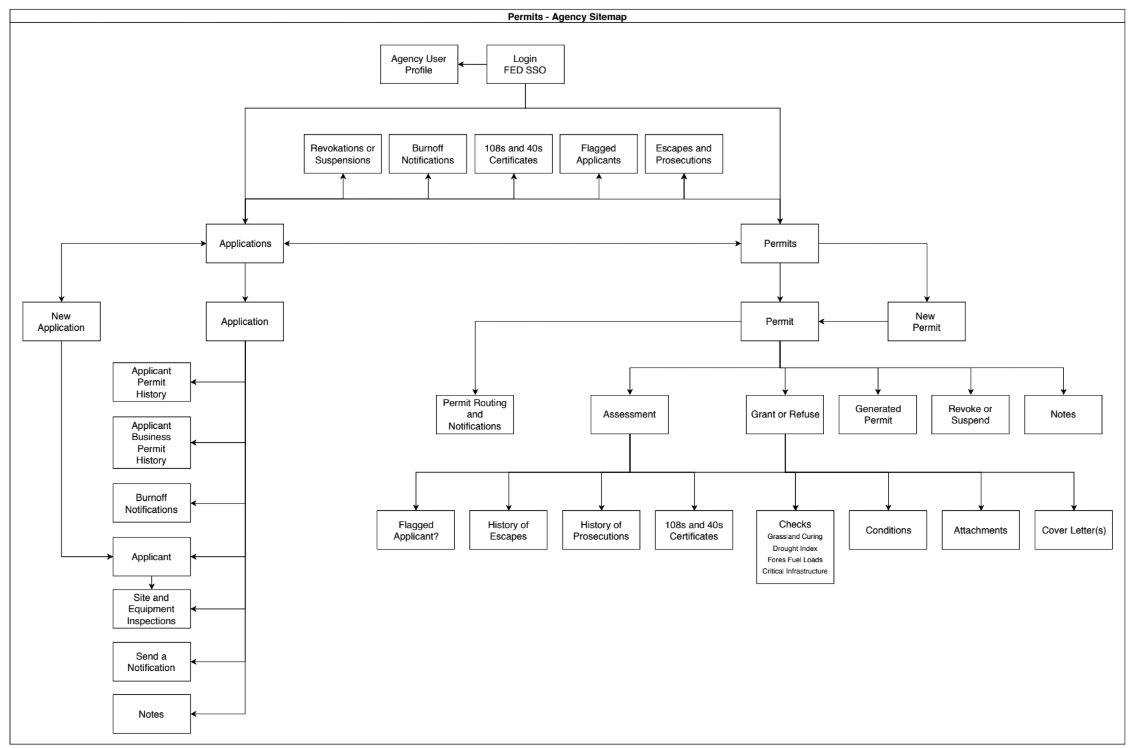
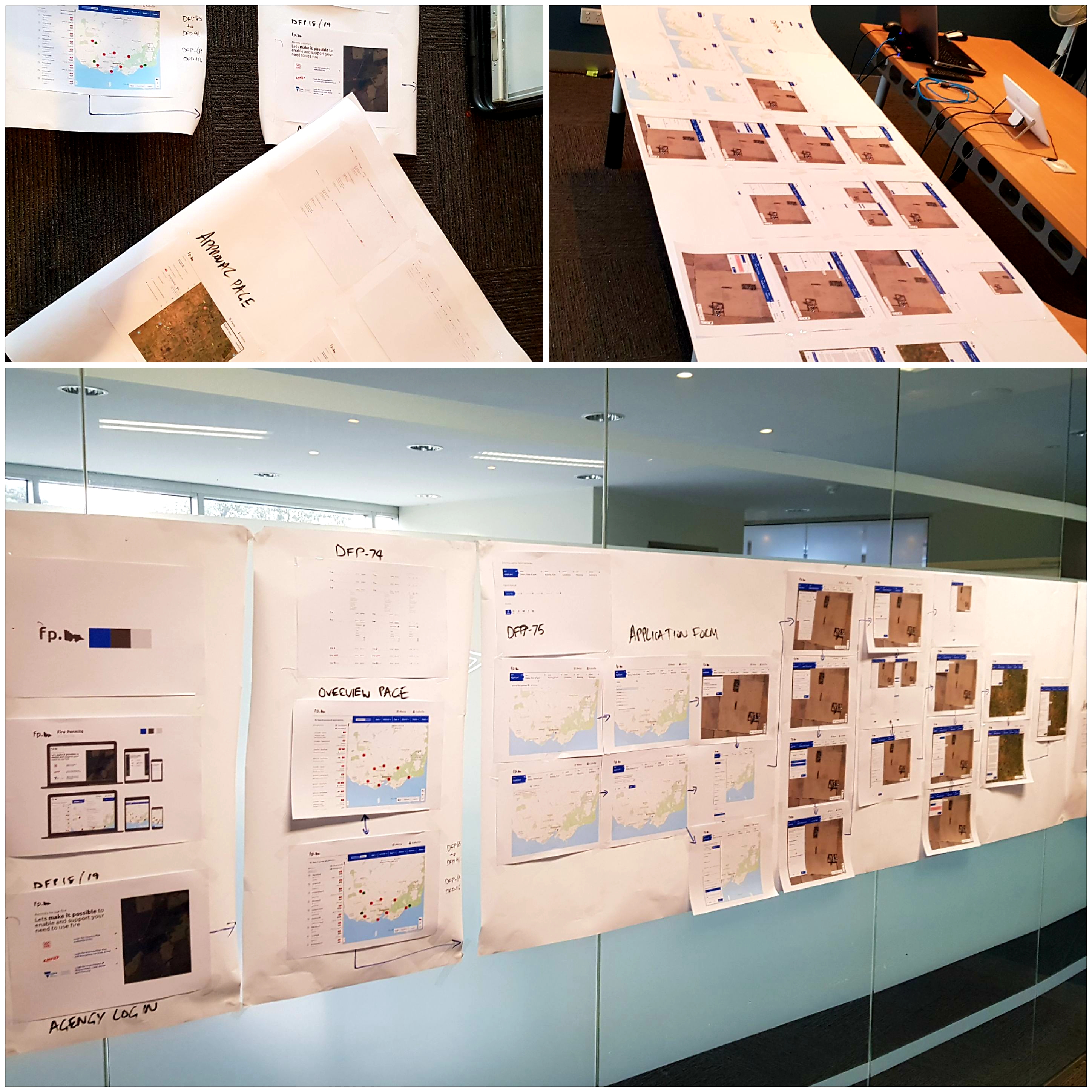
I ran service design and product strategy workshops with stakeholders from all three fire services. These workshops built shared understanding. The workshops also aligned the team on scope and set the future vision. From there, I moved into information architecture, user flows, sketches, and wireframes.
Design system:
One of the most important contributions of this project was Hydrant UI. Hydrant UI is the first design system for CFA. I built Hydrant UI to serve the project right away. Hydrant UI also gave a foundation for future digital products.
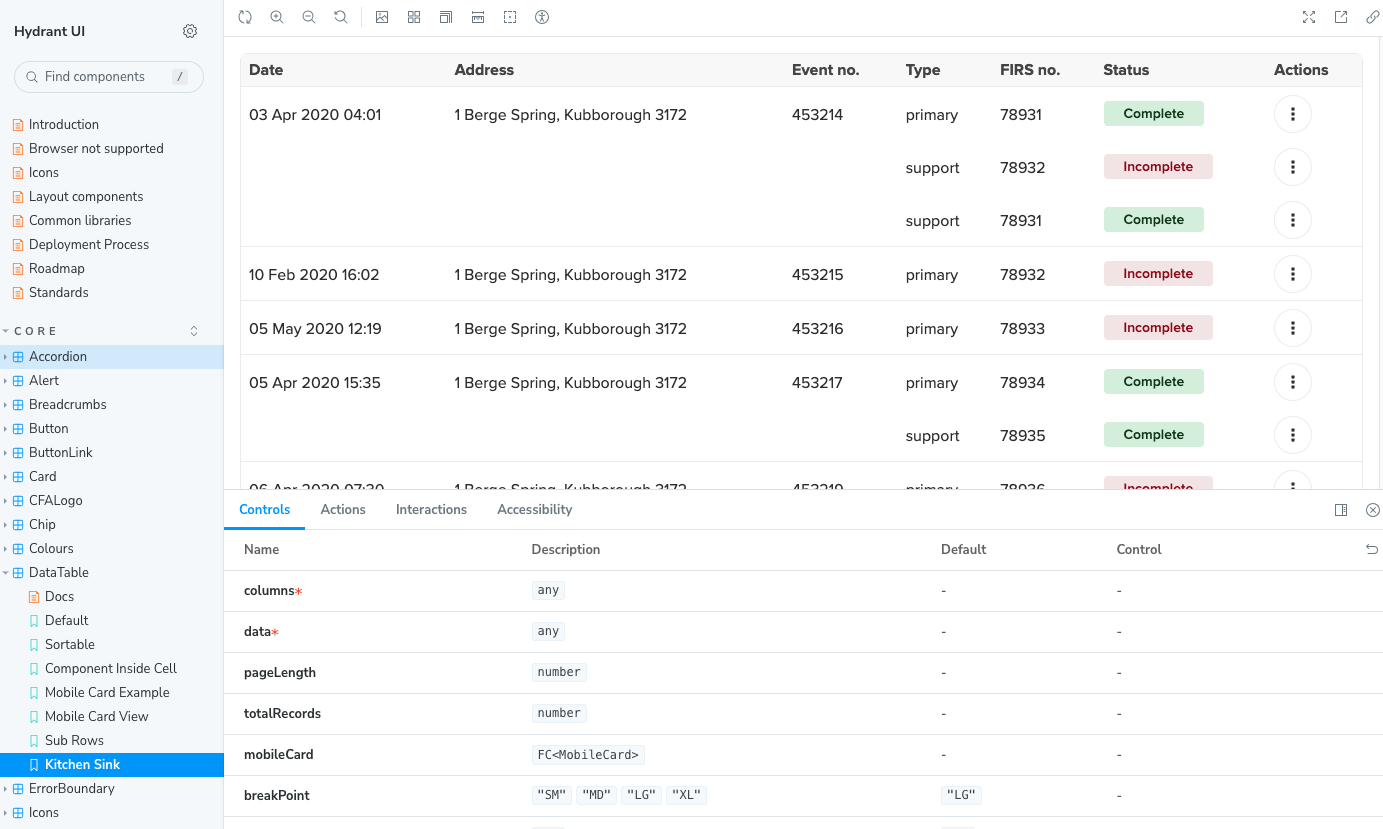
A core part of this phase was close work with developers. Together, we translated design system components into React components. I also added a DevOps-aligned workflow into the team practice from day one.
Sprint delivery:
I worked in sprints. I designed all UI and visual design for the platform. I then planned and ran usability testing to examine the experience before release.
Operationalise:
In the final phase, I supported user acceptance testing. I also supported handover to each operational team. I made sure administrators understood the platform. I made sure administrators had confidence to use all functions of the platform.
Outcomes
Fire Permits Victoria launched as a single, mobile-friendly platform. Citizens across Victoria used this platform to apply for fire permits. The platform replaced a fragmented, paper-based system. The old system used multiple forms across three separate organisations.
- Unified the system. One platform now manages permits that CFA, FFMV, and FRV once issued separately.
- Found 70 years of gaps in the legislation. The new digital process exposed unclear rules and old requirements in fire permit law. No one updated this law since the paper era.
- Reduced the administrative burden. The team combined multiple paper forms into a single digital flow. This change created real efficiencies for both applicants and Operations Managers.
- Improved visibility for the community. Fire service Operations Managers gained better transparency of permitted burning locations across Victoria.
Learnings
I worked inside a large business with many stakeholders. The work taught me lessons that I will use in future projects.
- Join the project early. Late engagement, because of competing project priorities, created pressure later in the project. A designer at the table from day one improves the quality of decisions made before design work officially starts.
- The role of only designer is both a constraint and a gift. Full ownership let me work with consistency and clarity. But the role needed strict prioritization to stay ahead of the development team.
- Staying ahead of development takes discipline. In a sprint-based program, design debt grows fast. I learned that design lead time is not optional.
- Teams can solve problems in remote collaboration. COVID moved the team to fully remote work. Miro became the shared workspace for the project. Workshops, flows, and reviews all moved online. The project did not lose momentum.
- Handover is a design problem. The quality of developer collaboration is directly tied to the quality of design artefacts and the relationships built along the way. This project sharpened how I think about both.
- Design education does not pause the project. In a team that is new to a designer, I often taught and delivered work at the same time. Small wins build trust early. This trust creates room for bigger design decisions later.
- Consistency is not optional. Usability testing confirmed what I expected. UI inconsistencies were the main source of user errors and confusion. This finding showed how much users rely on familiar patterns.